Scientific collaboration between Professor Marco Toscani and Dr. Pasquale Fino, Chair of Plastic, Reconstructive and Aesthetic Surgery, Umberto I Health Center – “Sapienza” University of Rome.
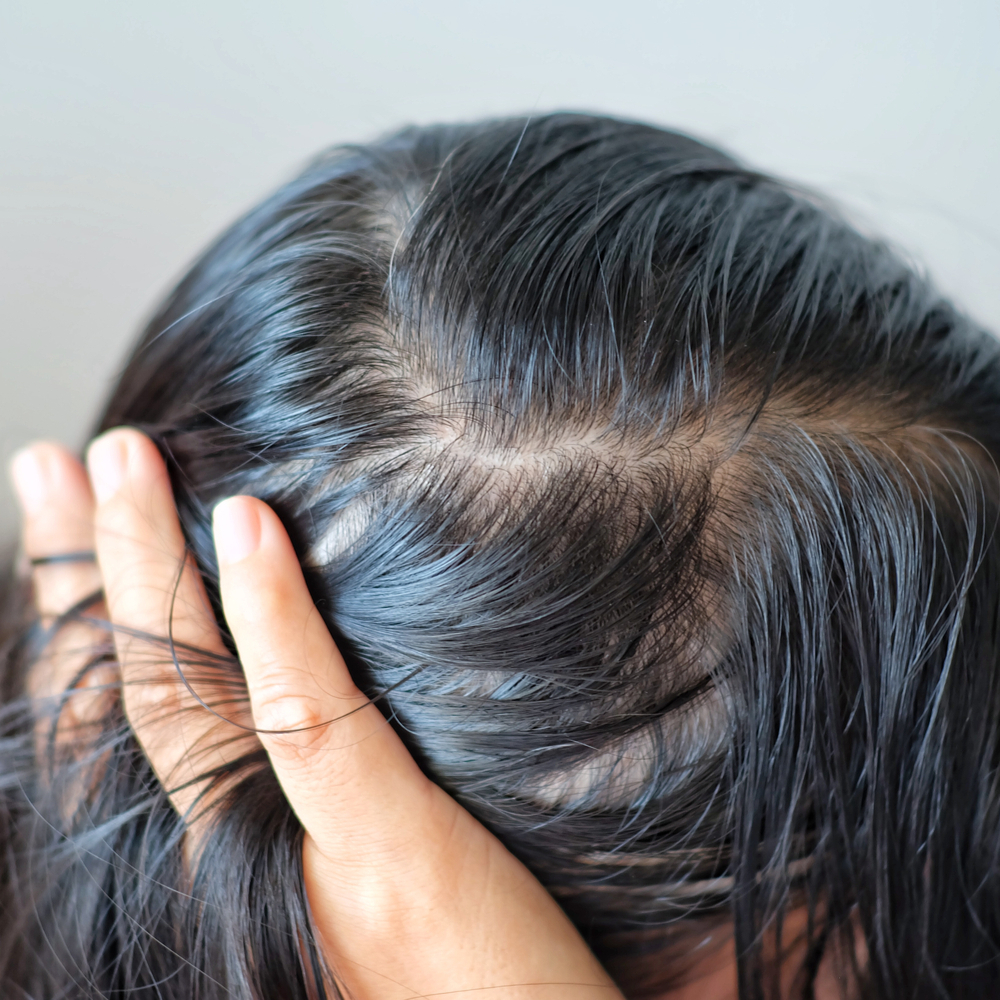
Hyperhidrosis of the scalp is often confused with seborrhea but certain elements exist that differentiate the two different scalp conditions: those who suffer from hyperhidrosis have off-white, only slightly red, wet, dull skin with dry hair tips and the skin of their face is neither greasy nor oily.
Eccrine sweat glands cause hyperhidrosis. These are located over the entire body, especially on the scalp, face, palms of the hands, soles of the feet, bikini area and armpits. Sweat glands have a tube-like structure, with the base located in the deeper dermis, coiled upon its own structure. These glands exit onto the skin in correspondence with an epidermic crest. These vascularized, innervated glands are regulated by the autonomic nervous system (cholinergic fibers of the sympathetic nervous system). The eccrine sweat glands produce sweat (through merocrine secretions), composed 98-99% of water, 0.8-1% of minerals and the remainder of organic substances such as urea, lactic acid, uric acid, etc. When sweat mixes on the surface with everything else, it determined the formation of the hydro-lipid-acidic film which makes it necessary to wash one’s hair regularly (3/4 times a week) with a delicate, frequent-use, non-aggressive shampoo, so as to cleanse without irritation.
Hyperhidrosis appears when there is an excessive presence of water on the scalp. This increase in water in the composition of the hydrolipid film, the skin’s first defence from the external environment, leads to an increase in pH towards alkaline values with the loss of bacteriostatic power and scalp sensitivity. Hyperhidrosis nevertheless has internal causes that are difficult to overcome and eliminate. The proper composition of the hydrolipid film must be reset so as to rebalance the pH and consequently the function of the skin as a barrier.
Among the causes of hyperhidrosis we note:
1) hyperemia: excessive blood circulation leads to emotional hyperhidrosis;
2) lymphatic circulation: a slowing of the lymphatic circulation leads to a build-up of lymph at the subcutaneous level with liquid stasis and perspiration;
3) menopause: hormonal imbalances that occur cause cutaneous vasodilation accompanied by excess sweating.
Hyperhidrosis is a complex phenomenon with effects not only at the level of the scalp but also of the hair, which often appears wet.